

Industry Pack · Tax
Tax
From invoices and filings to structured, reconcilable, traceable tax data.
Discuss a digitization challengeInputs
Documents that arrive in many formats, from many systems.
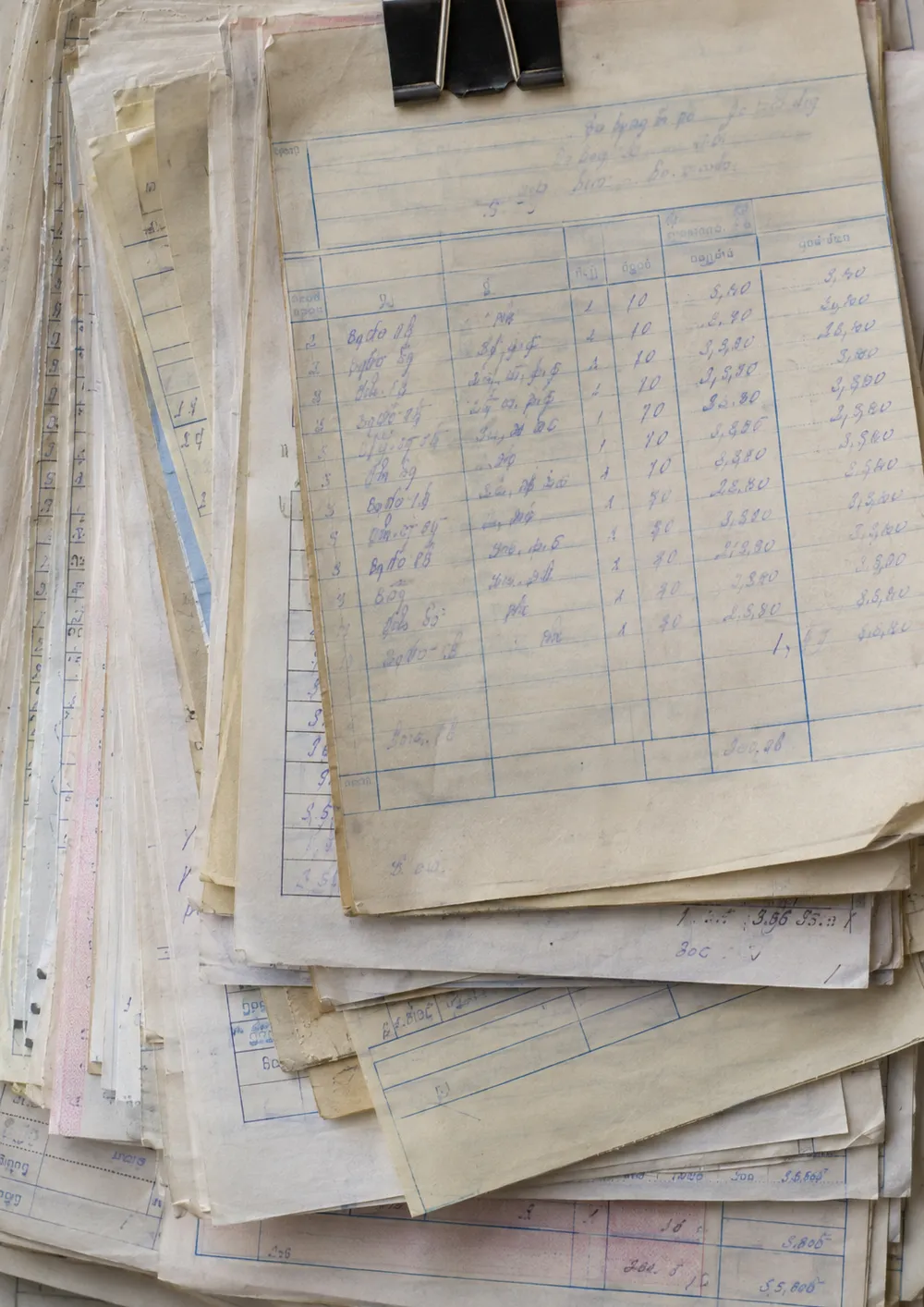
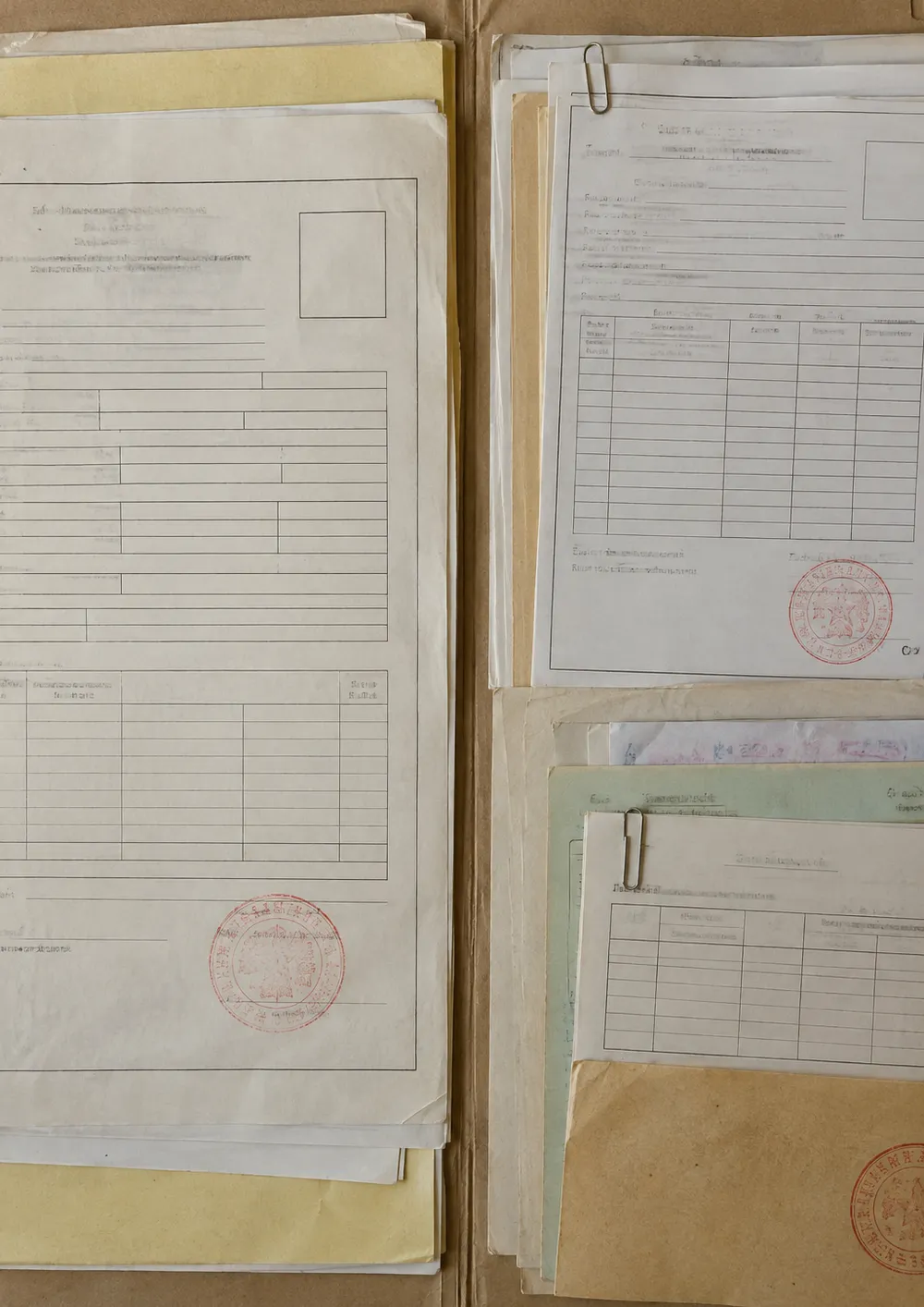

Input 1 of 4
Invoices
Electronic and scanned invoices from many issuers and formats.
Input 2 of 4
Taxpayer registration files
Registration, change, and status records for each taxpayer.
Input 3 of 4
Inspection and audit files
Inspection reports, decisions, and supporting evidence.
Input 4 of 4
Tax returns and filings
Periodic returns and supporting schedules, in electronic or paper form.
Challenges
Hard problems we solve
Problem 1 of 5
Many invoice formats
The same fields appear in different layouts and formats across issuers.
Problem 2 of 5
One record per taxpayer
Identifiers and names vary between sources and must be linked to a single taxpayer record.
Problem 3 of 5
Reconciling invoices, returns, and books
Differences between sources must be found and shown for an officer to review.
Problem 4 of 5
Security, permissions, and audit logs
Taxpayer data is sensitive, so role-based access and a verifiable log are part of the requirement.
Problem 5 of 5
Evidence for every value
Each extracted value must trace back to its source document and processing history.
Target outputs
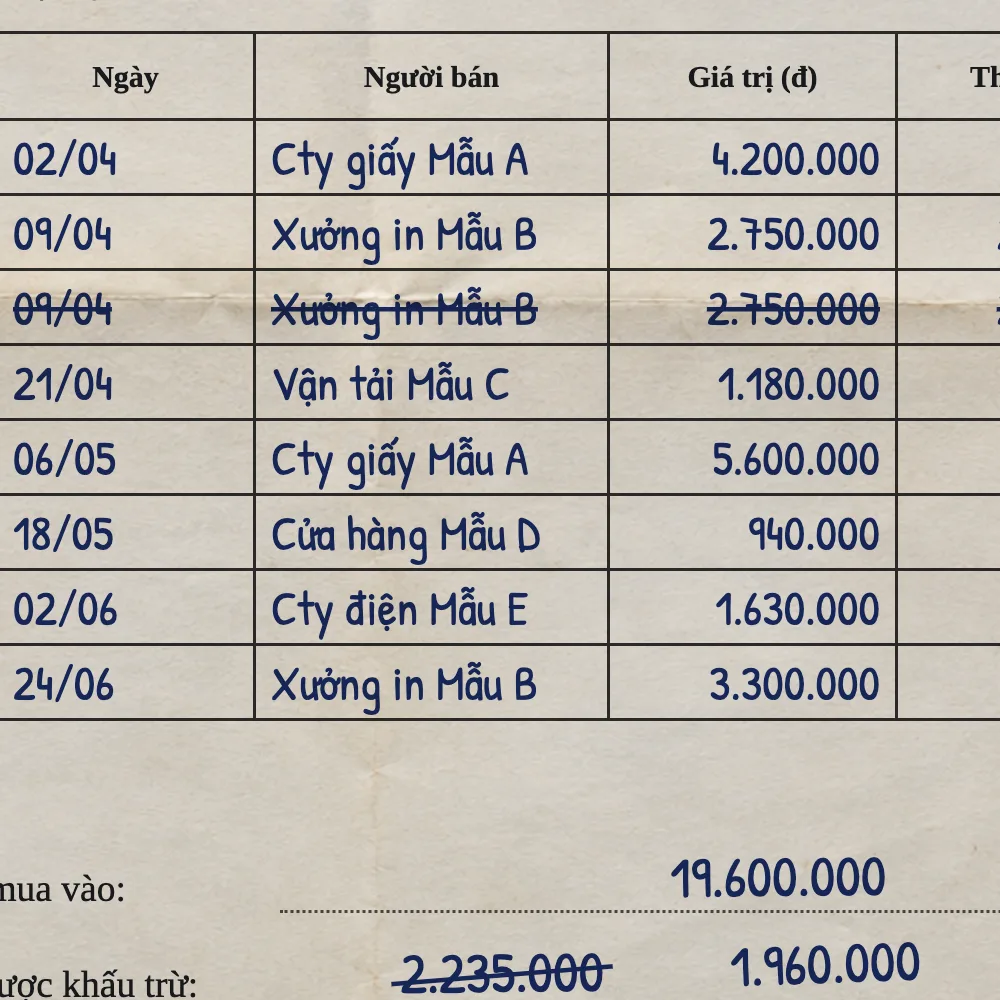
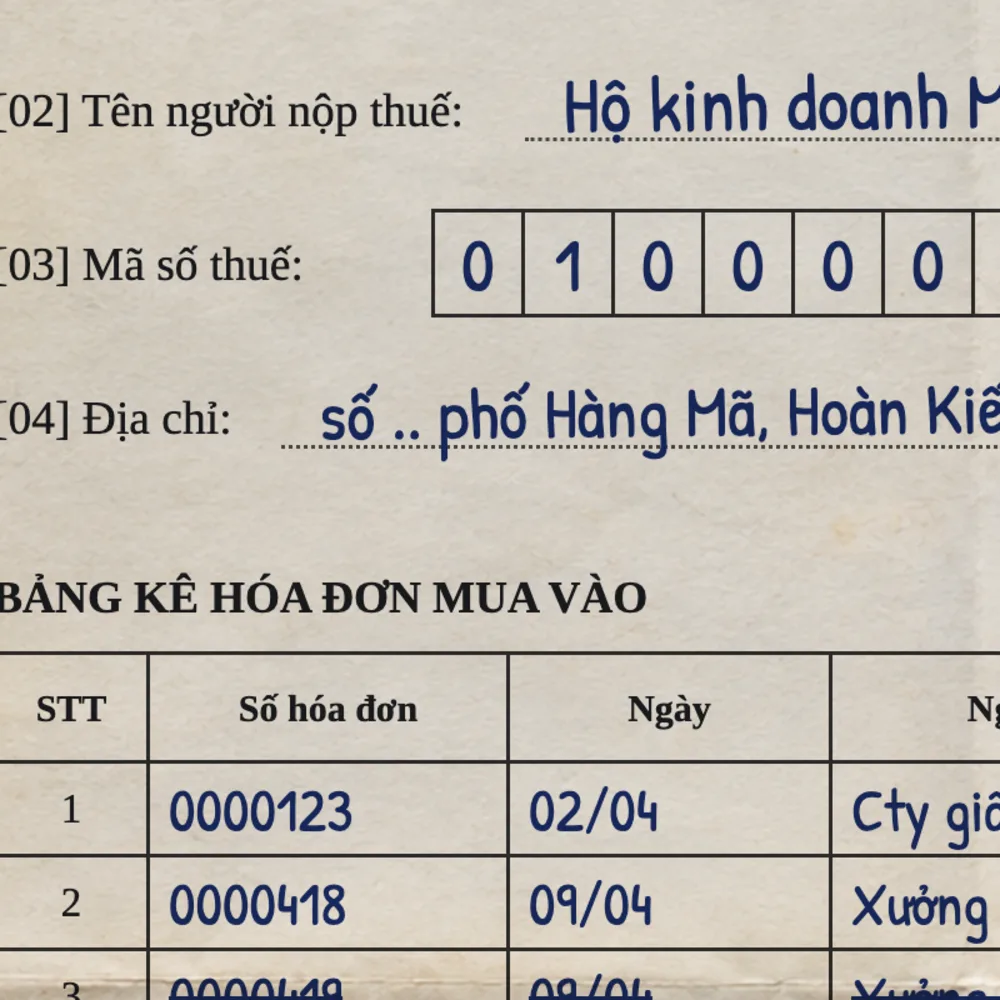
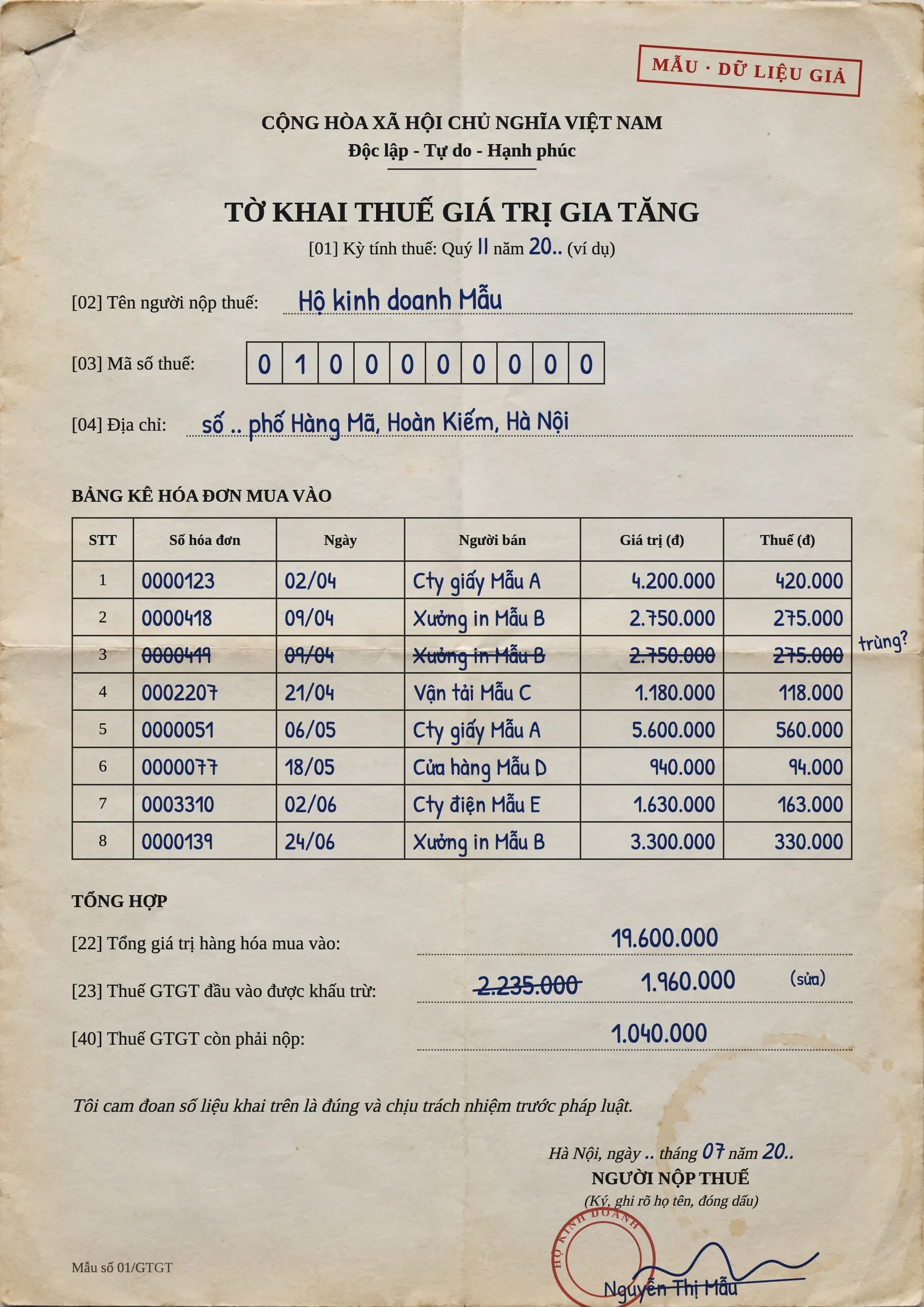
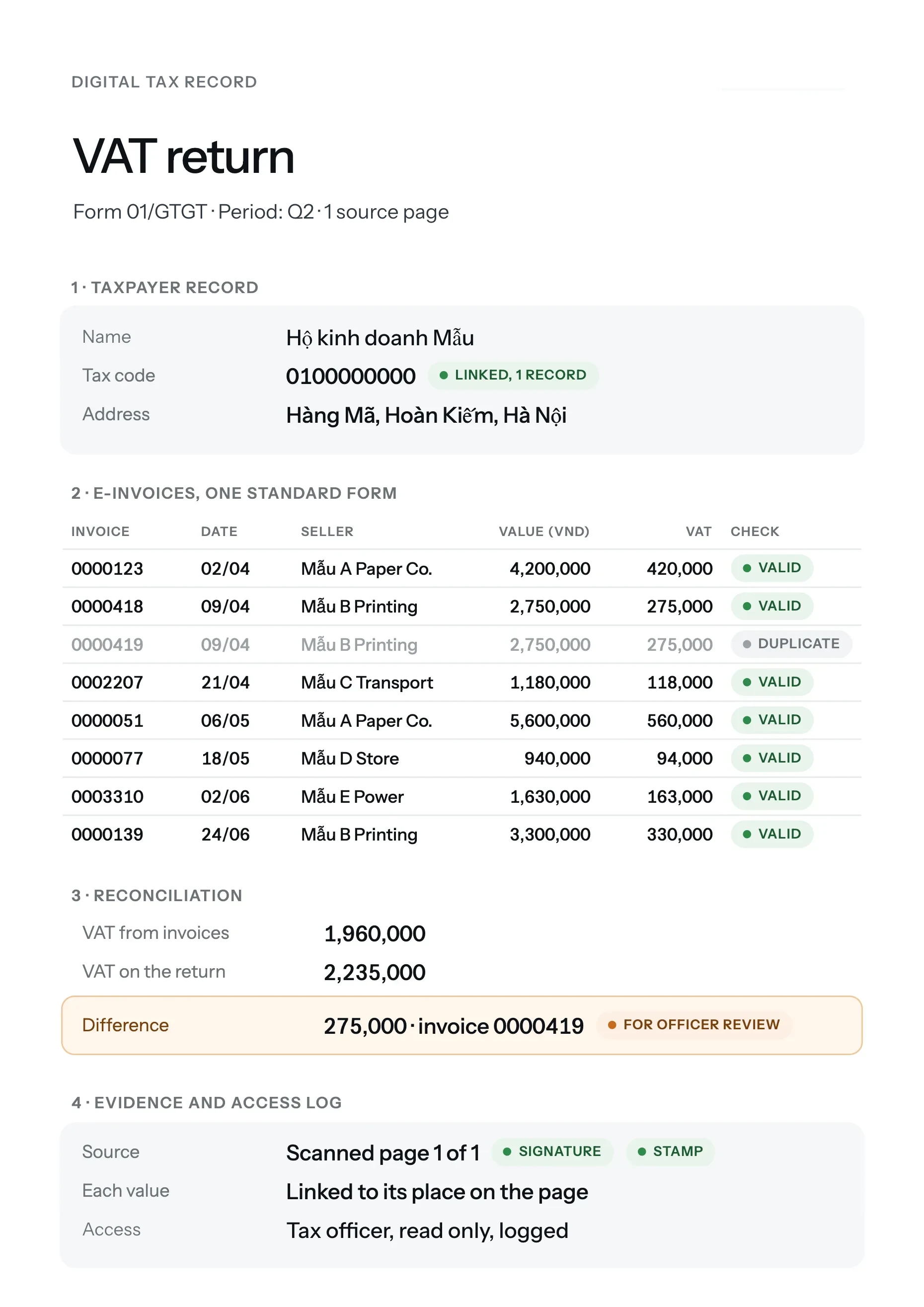
One return, turned into data band by band.
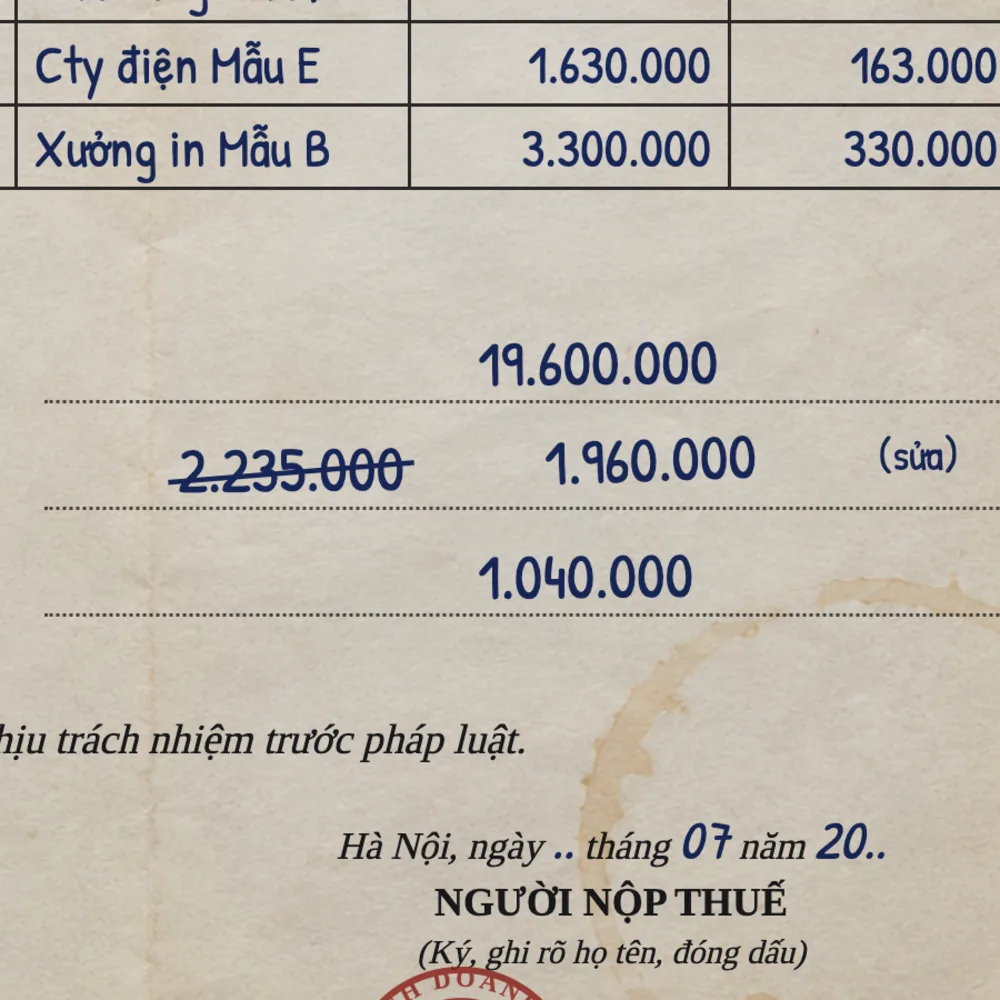
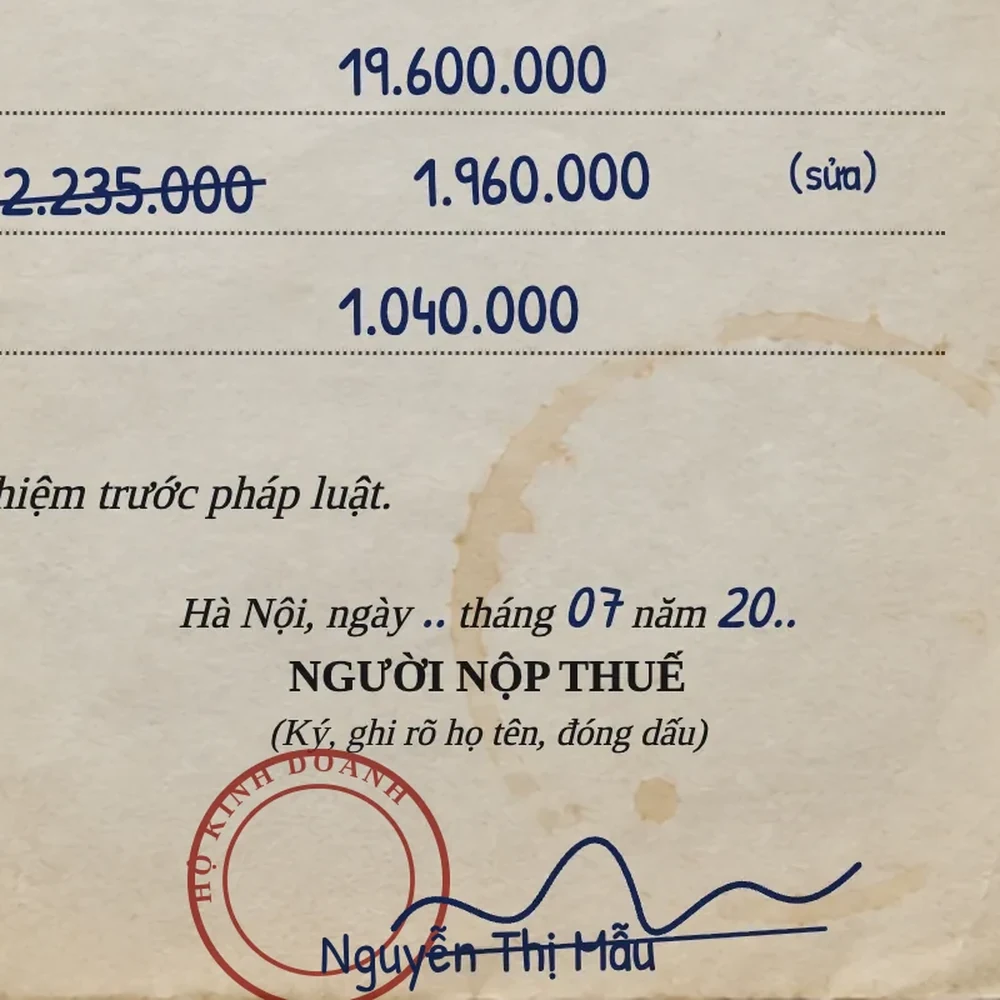
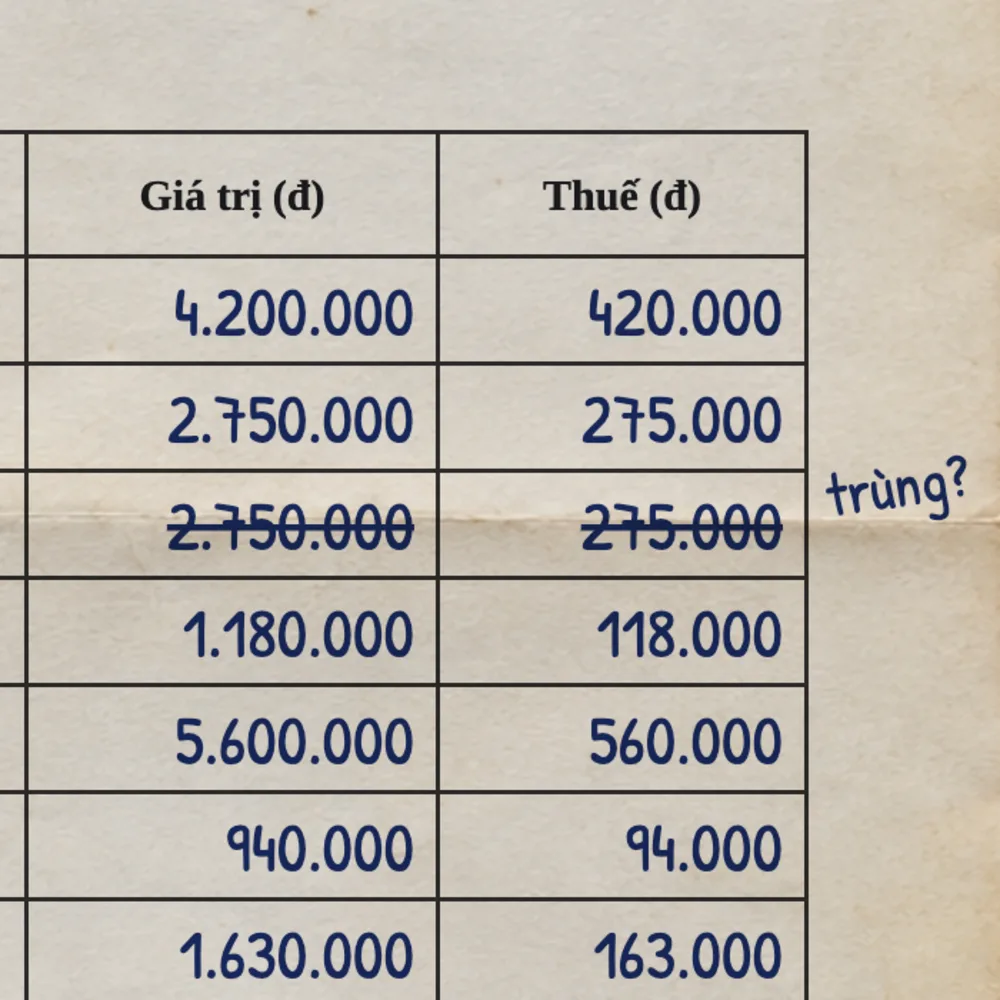
The paper return
Handwritten, corrected, stamped
Periodic returns and schedules, electronic or paper.
Step 1 of 4
Taxpayer records
One record per taxpayer, linked to their returns.
Step 2 of 4
Standardized e-invoices
Every invoice checked and put into one standard form.
Step 3 of 4
Reconciliation reports
Matches and differences shown for officer review.
Step 4 of 4
Source evidence and processing history
Each value links to its source document and processing history.
The record
Tax records archive
Structured archive with role-based access and a log.
Where the value lives
One shared record: officers review only the differences, and each figure traces to its document.
 PaperData
Tax digitization
Watch how Chinh Phong organizes tax records, reconciles differences and traces values to their sources.
2 min 2 s, illustrative data
Chapters
Start with one representative dataset
Pick a representative set of invoices, returns, and taxpayer files. Agree on the record format, the taxpayer identifiers, the key fields, the rules for missing or conflicting values, and how the results will be accepted. Measure the results on that set before scaling up.
Survey the sources
Identify existing invoice, return, and record types with their formats and where they are kept.
Standardize the records
Agree on the record format, the taxpayer identifiers, and the checks for each field.
Extract and reconcile
Extract fields from invoices and returns, reconcile across sources, and flag differences.
Accept and archive
Measure accuracy on a checked sample set, then load into an archive with access by role.
Designed for tax records that must agree across sources and trace back to their documents. Full production starts only after the representative set is accepted.
Next industry pack
Education
Standardize learning history and education records to serve long-term digital governance.