

Industry Pack · Customs
Customs
From declarations and shipping documents to structured, traceable customs data.
Discuss a digitization challengeThe problem
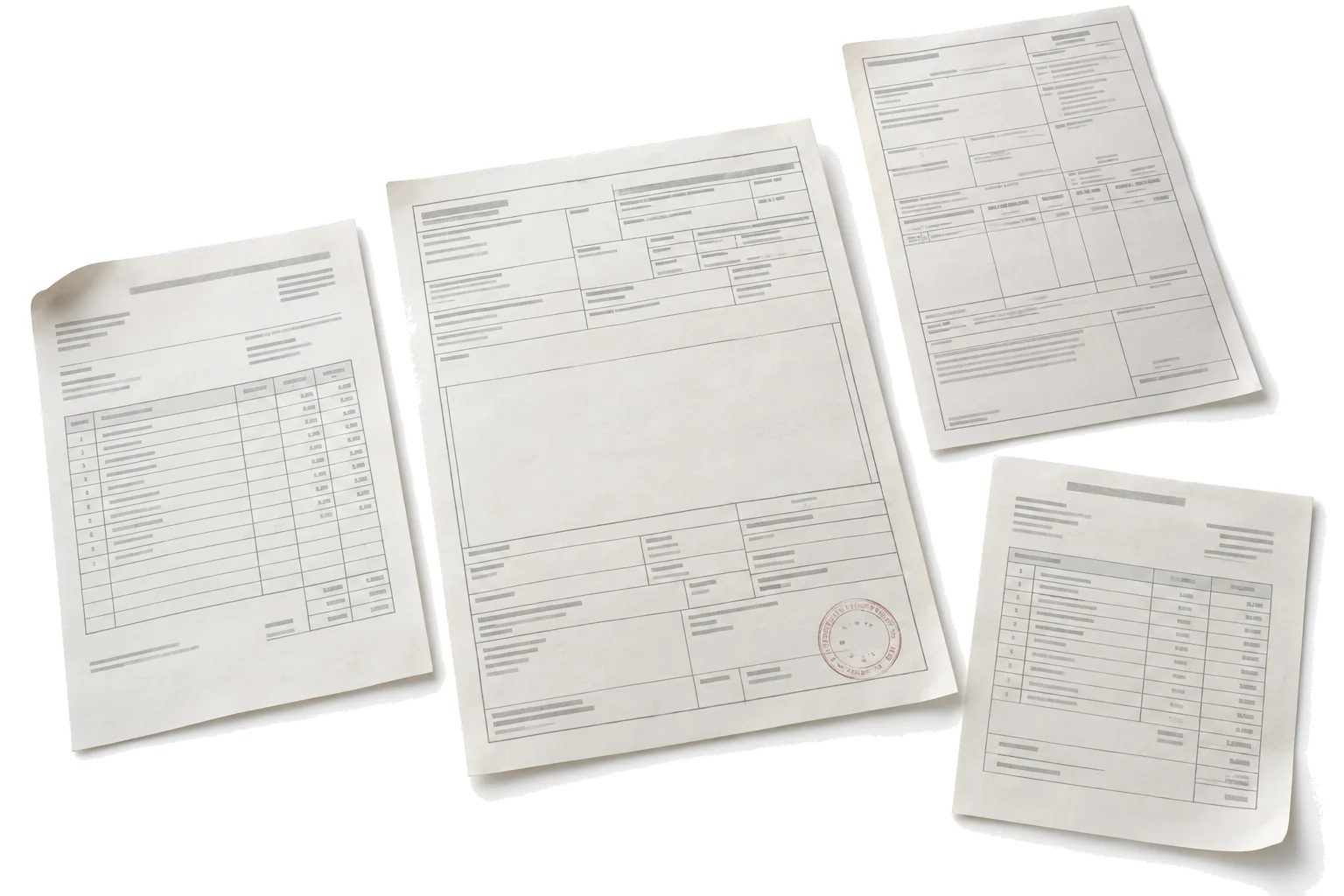
Customs work runs on declarations, invoices, packing lists and bills of lading, each with its own rules and code lists.
Many references
One shipment, many names for it
Before
Each step keeps its own reference
One consignment appears under different references at the port, the carrier and the declarant.
Linking
Every paper points to one consignment
Containers, vehicles and documents are linked to the declaration, with their milestones.
After
One record every step can use
Declaring, cargo tracking, risk checks and the archive all draw on the same record.
One consignment
- Port
- Carrier
- Declarant
- Invoice
- Packing list
- Bill of lading
One shipment
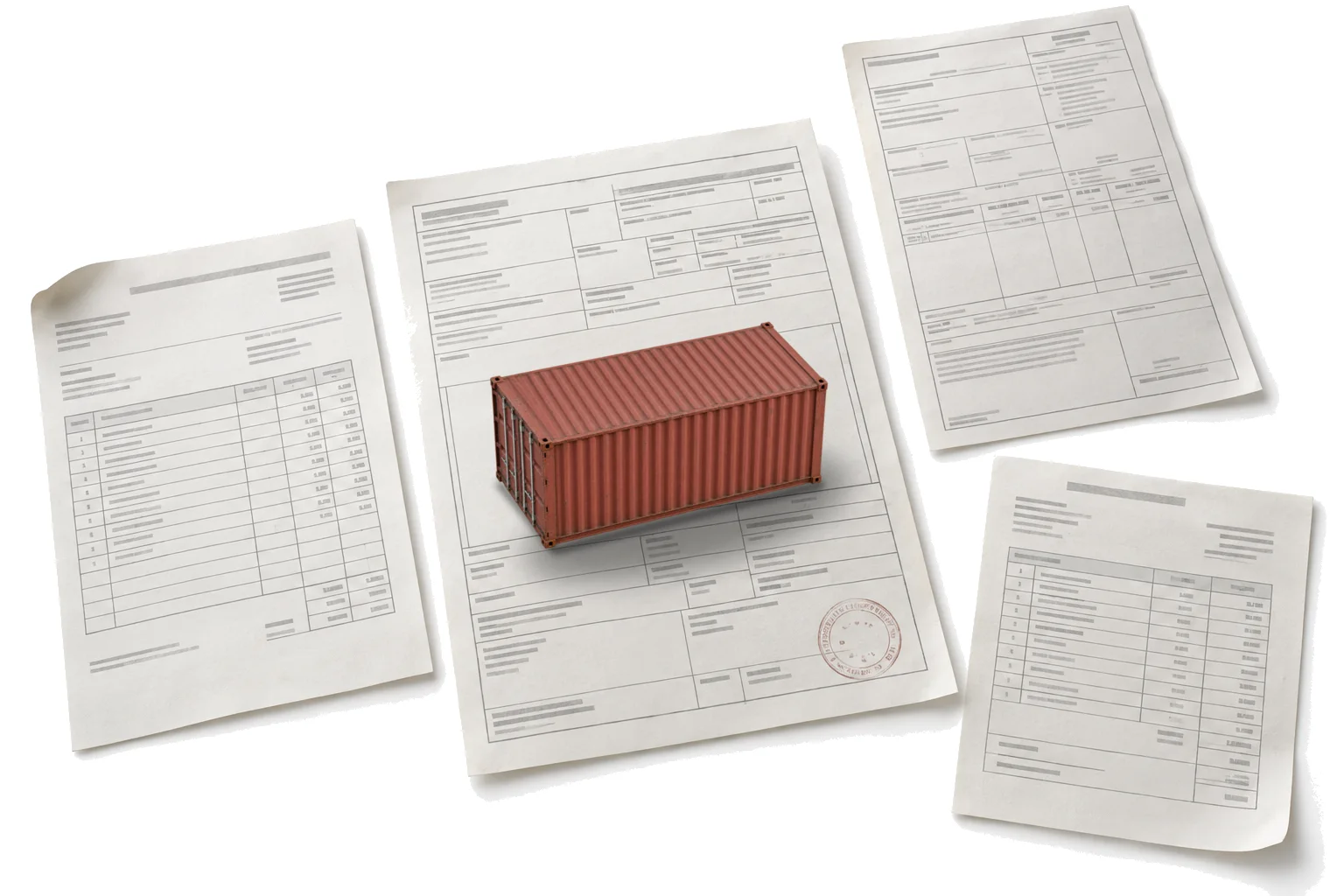
The container lands on its declaration
Each declared value must be checked against the supporting documents and the consignment itself.
Check 1 of 4
Commercial invoice
Each declaration field is cross-checked against the invoice it came from.
Check 2 of 4
Packing list
Goods codes and units differ between sources and change over time, so they are matched to one agreed standard.
Check 3 of 4
Bill of lading
The carrier knows this shipment by its own reference. It is linked to the declaration, and its source is recorded.
Check 4 of 4
The consignment
The container, the vehicle and their time milestones are linked to the same declaration.
Matched
One record, every value traced
Each value now traces back to its source document and how it was produced.
Why it matters
The same check, for every shipment
No step has to re-key the same declaration again.
Where the value lives
Less re-checking, and every figure still traced
Declarations and documents share one record, so officers re-check the same fields less.
Customs digitization
Watch how Chinh Phong links customs declarations and supporting documents to traceable consignment data.
2 min 3 s, illustrative data
Chapters
Start with one representative dataset
Start with a representative set of declarations and an agreed output standard. We will shape it into a data production line that can be measured, accepted and expanded.
Survey the documents
List declaration types, documents and existing systems, with the business rules involved.
Standardize the data
Agree on goods codes, entity codes and field formats across sources.
Extract and reconcile
Extract fields from declarations and documents, reconcile them with the consignment, and record the source.
Accept and archive
Check the result against an agreed sample set, then load it into the archive and open search.
Designed for customs records that must be reconciled against consignments and traced to their source documents. Production begins only after acceptance on a representative dataset.
Next industry pack
Tax
From invoices and filings to tax data that can be reconciled and traced.